As your pet grows older, you may begin to notice changes in the way they look, move and behave. Their coat may start to grey, their joints may become stiffer, and their hearing or eyesight may not be as sharp as it once was.
Changes to their memory, awareness and behaviour can be harder to recognise. They may happen gradually and can sometimes be mistaken for a normal part of ageing. However, changes such as confusion, restlessness or disrupted sleep may indicate that your pet’s cognitive function is declining.
While some cognitive change is expected as pets age, it can progress more quickly in certain dogs. This is often known as Canine Cognitive Dysfunction Syndrome (CCD), or ‘doggy dementia’, and is thought to affect nearly one in three dogs over the age of 11.1
What are the signs of cognitive decline?
Every dog is different, but some of the most common changes include:
- Memory loss or appearing to forget familiar routines
- Restlessness, pacing or difficulty settling
- Agitation or increased anxiety
- Becoming disorientated in familiar surroundings
- Changes in behaviour or sleeping patterns
- Increased barking or vocalisation
- Toileting inside the home
- Becoming less interested in play or interaction
You know your dog better than anyone, so even small changes from their usual behaviour may be worth paying attention to. These changes can be confusing and upsetting for both pets and their owners, particularly when a much-loved dog no longer seems quite like themselves.
When to speak to your vet
If you notice changes in your dog’s behaviour, memory, sleep or toilet habits, it is important to speak to your vet. Signs that appear to be cognitive decline can sometimes be caused by other age-related concerns, including pain, hearing or sight loss, urinary problems or an underlying illness.
Your vet can help rule out other possible causes and advise you on the most appropriate support for your dog. It may be helpful to keep a note of when the changes started, how often they happen and whether you have noticed any patterns.
You should contact your vet promptly if the changes appear suddenly, worsen quickly or are accompanied by symptoms such as weakness, loss of appetite, vomiting, seizures or difficulty walking.
Supporting your senior pet
Although there is currently no cure for cognitive decline, there are plenty of simple ways to help your dog feel more comfortable, confident and secure.
Keeping to a familiar daily routine can be reassuring, particularly around mealtimes, walks and bedtime. Try to avoid sudden changes where possible and make sure your dog can easily find their bed, food, water and the way outside.
Older dogs may also need more frequent toilet trips, shorter walks and extra time to process what is happening around them. Gentle enrichment, such as sniffing games, puzzle feeders or practising familiar cues, can also help to keep their mind engaged without overwhelming them.
Most importantly, remember to be patient and kind. Your dog is not being difficult or disobedient, and calm reassurance can make a real difference when they are feeling unsettled or confused.
Herbal support for older pets
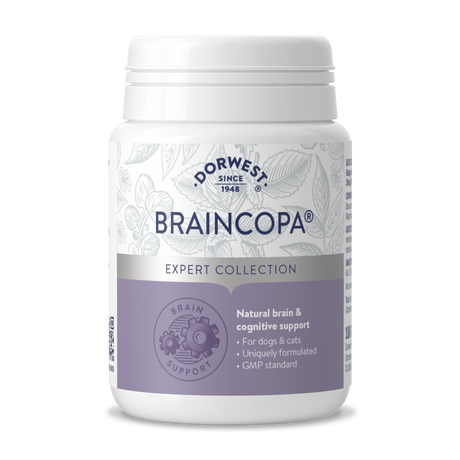
Alongside veterinary advice, a predictable routine and a supportive home environment, BrainCopa® Tablets can provide targeted nutritional and herbal support for older pets. Its unique multi-action formulation has been developed to support normal brain and mental function, helping to keep your pet’s mind agile throughout their golden years.
BrainCopa® contains a carefully selected blend of ingredients, including:
Bacopa monnieri
A herb traditionally used in Ayurvedic medicine as a ‘brain tonic’. It provides antioxidant support and helps to maintain normal memory, cognitive function and nervous system health.
DHA powder
An important omega-3 fatty acid that supports normal brain development and ongoing cognitive function. It is well tolerated and readily absorbed.
Lemon balm
Traditionally used to promote calmness and support pets experiencing restlessness or disrupted sleep.
Ginkgo biloba
Traditionally used in Chinese medicine and naturally rich in antioxidants, helping to support normal circulation and cognitive function.
Vitamin E
An antioxidant that helps to protect cells from oxidative stress, while also supporting memory and the uptake of DHA within the brain.
BrainCopa® provides targeted, multi-action support to help maintain normal cognitive function, memory and mental agility as your pet grows older.
By combining appropriate veterinary advice, a reassuring daily routine, gentle mental stimulation and targeted nutritional support, you can help your senior pet continue to feel safe, settled and loved.
References:
1 MacQuiddy et al. (2022)