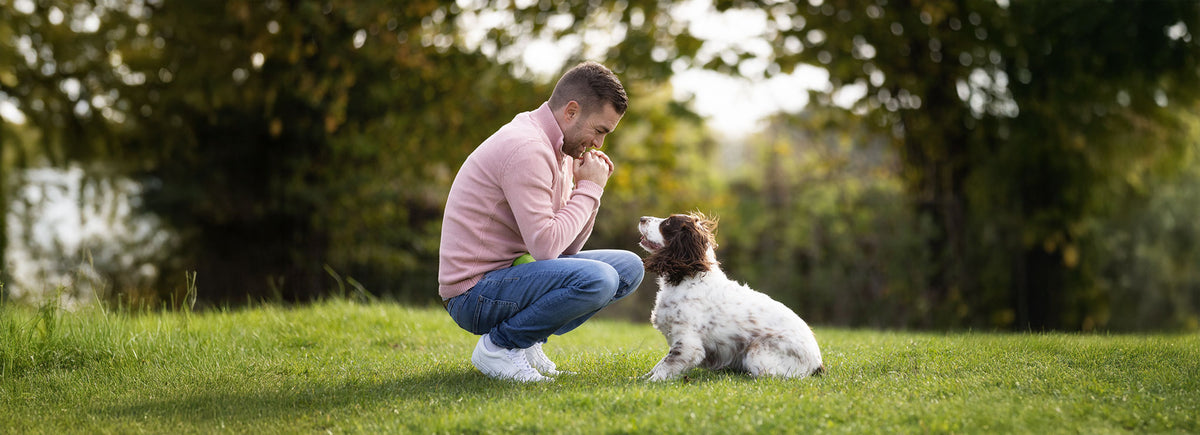
We’re delighted to announce that we’re partnering with accredited dog behaviourist and trainer Adem Fehmi, aka ‘Dogtor Adem’, for this year’s annual calming campaign during fireworks season.

Adem has loved all things ‘dog’ since he was a young boy. This led to gaining a degree in Animal Science and becoming a Canine Behaviourist and Trainer. Whilst much of what he knows about dogs has come from observing and working with them for many years, he now has over 20 years’ experience as a Behaviourist and Trainer. Adem is CFBA (Canine & Feline Behaviour Association) accredited, a ‘Kids Around Dogs Approved’ professional, and also an Assessor and Volunteer for Pets as Therapy.
Keep reading as he answers some of the most common questions he gets asked, shares his advice on spotting the signs of firework fear and what he recommends to help dogs cope with fireworks.
Why are fireworks so frightening for dogs?
Our dog’s ancestors, the wild canid (think wolf, fox, or wild dog for example), rely on their extremely well-developed senses to alert them to danger to keep them safe. Loud noises and flashes of light signal danger, which wild canids look to avoid and seek safety from. As our domestic dogs retain many of the same instincts, they too also try to avoid such ‘danger’. In the wild, these loud noises and/or flashes of light can come in the form of thunderstorms, volcanic eruptions, migrating herds, and avalanches, to name just a few.
All of these natural hazards can cause stress to a wild canid, igniting their fight or flight response yet all, more often than not, also come with far more warning than a firework being set off. With this taken into consideration, it is no wonder that so many of our dogs find fireworks night such a stressful experience. Imagine sleeping soundly in your living room and suddenly being awoken by multiple loud bangs and flashes of light that seem to have come out of nowhere, with no warning at all!
Why should owners start preparing weeks in advance?
No one wants their dog to feel stressed, anxious or afraid and, as loving owners, it is important that we don’t simply wait for fireworks night to see how our dog may react to this event. It is also important to remember that even if your dog seemed to cope well with fireworks in the past, things can change and this may mean that this year this event becomes stressful for your dog.
If you already know that fireworks are likely to have a negative effect on your dog then this is definitely the time to start thinking about making positive changes to your dog’s day that will have an impact on their ability to cope this fireworks season. My advice is always to be proactive! Training can never start too early, especially if you already know that your dog is sensitive to noise or shows anxious or fearful behaviours in other contexts as this can make it more likely that they will find it harder to cope during fireworks season.
Both behaviour training and Dorwest’s Calming Duo work best when implemented at least 4 weeks in advance, if not longer.

What are the signs your dog is frightened of fireworks?
There are many signs to look out for that might indicate that your dog is stressed or fearful of fireworks. These include:
- A tucked up body and/or tail
- Cowering
- Ears pulled back
- Whale eye – where the whites of their eyes can be seen
- Panting or hyperventilating
- Shaking or trembling
- Actively trying to avoid the sounds, sights or smells – such as trying to hide or run away
- Generally being agitated
- In extreme cases, becoming reactive to people, dogs or the environment in general
Similarly, if you already know that your dog is more of a sensitive soul, perhaps suffers from anxiety in other aspects of life or even other noise phobias, it can be especially important to take steps to mitigate their exposure to fireworks this Autumn and Winter as it is more likely that they will be affected.
Can a dog suddenly become frightened of fireworks, even if they were fine before?
A dog’s behaviour and tolerance of fireworks season can definitely change and whilst they might have been able to cope well in previous years, this should never be relied on. I would always urge owners to take steps each and every year to ensure their dog remains comfortable and calm. A change in behaviour can come about for a number of reasons including a change in life stage – for example moving from puppy to adulthood, or from adulthood to their senior years. Medical conditions, including those that affect their senses can also play a part, as can their experiences over the year since last fireworks season. Sometimes it is not possible for an owner to pinpoint exactly what the change has been, however it is important that we never just rely on the fact that our dog has seemingly never been bothered before.
Can comforting a frightened dog reinforce their fear?
From my experience, it is completely dependant on your individual dog, the way that they are behaving, and the type of comfort you are offering. Some dogs will feel reassured with additional comfort, some may welcome being spoken to gently but not touched, and others may prefer to be completely left alone as otherwise they start to feel more frightened or anxious. It is important to read your individual dog and act accordingly.
It is also important that we never just simply ignore our dogs, instead we should always look to be proactive, finding ways to helping them to feel more secure and comfortable by creating a more positive and reassuring environment, which can look different for each individual dog. If you are unsure of the best approach to help your individual dog I would always recommend seeking the advice of an accredited and experienced behaviourist.
What's the biggest mistake owners make during fireworks season?
From my experience, I have found that the biggest mistake is not being prepared, not thinking far enough ahead as to what is to come, and not spending the time needed to positively working through any fears and phobias their dog might have in the lead up to 5th November. This is especially true if an owner already knows that fireworks season is likely to cause their dog to feel anxious or fearful.
I often see owners ‘bumping’ the problem year to year, trying to get through any nights as quickly as possible that fireworks might be let off. Whilst an owner might think that short term stress, anxiety and fear will not have an effect on their dog in the long run, it absolutely can and does.
Why do calming supplements work so well alongside training?
Calming supplements such as Dorwest’s Calming Duo help to support the natural relaxant pathways within your dog’s nervous system, all without any sedative effect. This can help your dog to feel more at ease overall, which can assist with helping your dog to make more positive associations and overcoming any anxieties and fears when undertaking behaviour training.

When is the best time to start using calming supplements before fireworks?
You can use calming supplements such as Dorwest’s Scullcap and Valerian alongside behaviour training at any time, however I would recommend that you start using these at least three weeks before any expected fireworks to help your dog navigate this tricky season as best as possible. This will allow for the calming supplements to have their full effect.
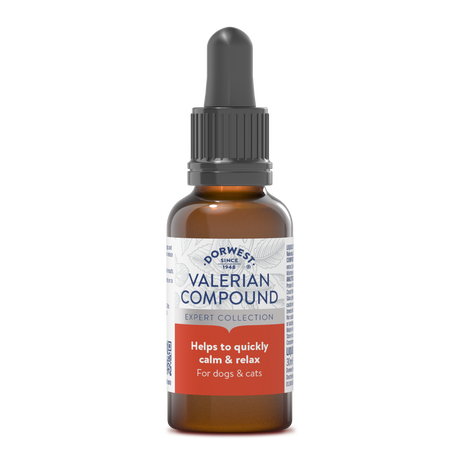
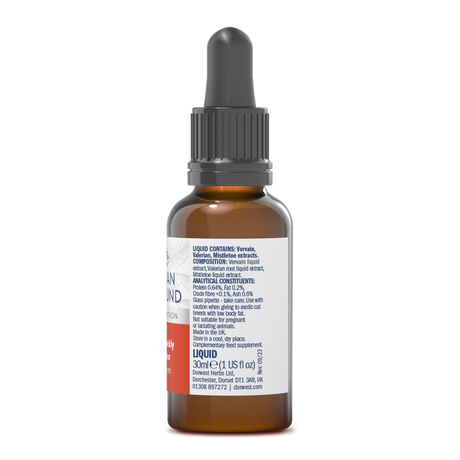
In addition to Scullcap and Valerian, you can also have Dorwest’s Valerian Compound on hand as this can be used at any time to give your dog an added calming boost – which can be particularly helpful on fireworks night itself or indeed at any other time that your dog experiences, or you think they might experience, a bout of stress or anxiety.
What are your three most important pieces of advice for owners of anxious dogs?
Seek advice early, from both your vet and from an experienced and accredited canine behaviourist. An experienced behaviourist, such as myself, in particular can help you to unpick the underlying causes and issues at hand, they can then tailor a positive behaviour training programme to suit both your dog’s needs as well as yours.
Use supporting products alongside behaviour training such as Dorwest’s Calming Duo. Whilst these alone will not be able to change your dog’s mindset, they absolutely can assist with calming your dog’s nervous system, which can in turn help them to create more positive, and fear free, associations over time. This can help to support the effectiveness of any behaviour training you undertake with your dog, as well as help them to cope better on nights such as November 5th that might otherwise prove particularly stressful.
Don’t give up! Overcoming any type of anxiety in dogs is rarely, if ever, a quick fix. Consistency, patience and the right (positive) approach for your individual dog is key. Remember that slow and steady wins the race and changes often happen in small increments over time. This is not a failure of you or your dog, it is because you are working on changing their psychological state. You wouldn’t expect a person with a fear to be cured overnight, the same is true for our dogs.
If you have any questions or need help choosing which anxiety support is best for your pet, feel free to contact our friendly team of product experts on 01308 897272 or email info@dorwest.com.
For more advice follow us on social media @dorwest to see Adem’s latest tips on keeping your pets calm this fireworks season. Adem is the owner and founder of DogEase, a dog training and behaviour business based in Hertfordshire, where he helps owners better understand and support their dogs. Plus you can also follow him on Instagram at @dogtoradem for more expert guidance.