Looking after your dog’s teeth is an important part of their everyday care routine. While brushing remains one of the most effective ways to physically manage plaque and support oral hygiene, many owners also look for simple daily support that fits easily into feeding routines.
One ingredient that has become increasingly popular in dog dental powders is Ascophyllum nodosum — a brown seaweed commonly used in dental supplements. But what does the research actually say, and why is this ingredient so widely used for dog dental care?
In this blog, we take a closer look at the clinical evidence behind Ascophyllum nodosum, how researchers think it works, and why it has become such a well-known ingredient in dental powders for dogs.
What is Ascophyllum nodosum?

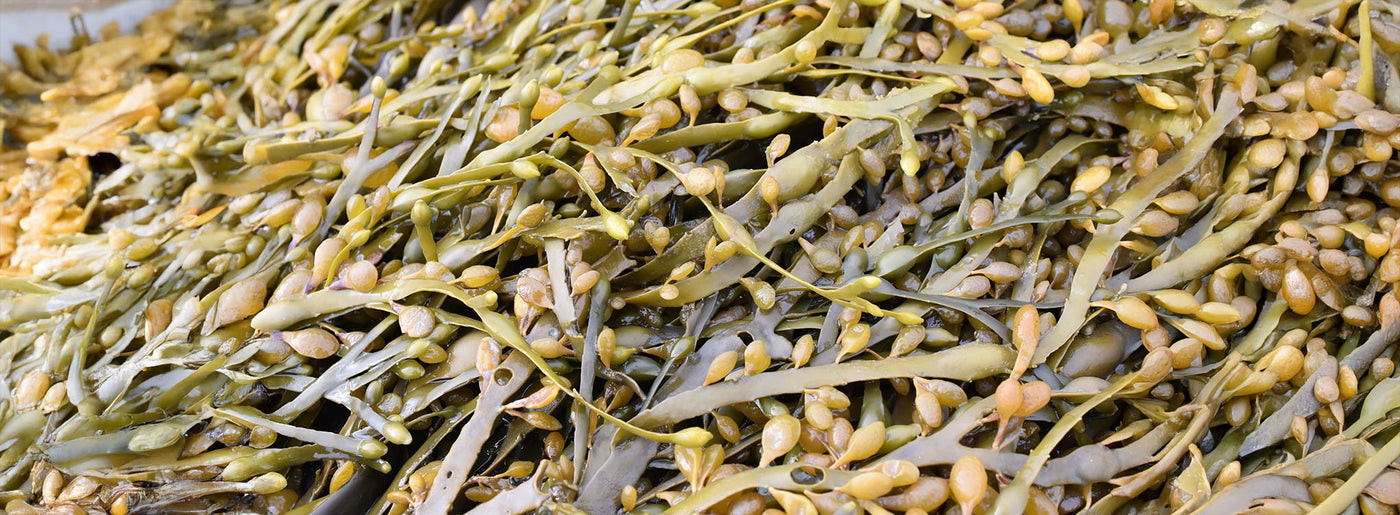
Ascophyllum nodosum is a large, cold-water brown seaweed found along rocky shorelines in the northern Atlantic Ocean. It’s also known by several common names, including knotted wrack, egg wrack, rockweed, knotted kelp and Norwegian kelp.
It has long, tough, leathery fronds with distinctive egg-shaped air pockets along the stem, which help it float and stay close to sunlight as the tide moves in and out.
For pet dental care, Ascophyllum nodosum is typically dried and milled into a fine powder, making it easy to include in daily supplements or sprinkle-over-food dental powders.
Unlike brushing or chews, Ascophyllum nodosum does not work by physically removing plaque or tartar build-up. Instead, it is often described as a systemic dental ingredient, because it is consumed, digested and then thought to influence the oral environment through compounds that reach the mouth via saliva.
This is one of the reasons it has become such a popular ingredient in modern dog dental powders, as it allows owners to support their pet’s oral hygiene without needing to reach for the toothbrush every time.
Clinical evidence in dogs
The strongest evidence for Ascophyllum nodosum in dog dental care comes from controlled veterinary trials.
A key study, published in Frontiers in Veterinary Science in 2018, looked at the effects of daily Ascophyllum nodosum supplementation on the oral health of dogs¹. This was a double-blind, randomised, placebo-controlled study involving 60 client-owned dogs. All dogs had a professional dental cleaning before being split into two groups: one received Ascophyllum nodosum, while the other received a placebo. The dogs were then assessed over 30, 60 and 90 days.

The study found that dogs receiving Ascophyllum nodosum showed significantly improved oral health markers compared with the placebo group, including plaque index, calculus index, oral health index, gingival bleeding and volatile sulphur compounds¹.
In simple terms, plaque and calculus increased in both groups after professional dental cleaning, but the increase was slower in dogs receiving Ascophyllum nodosum. Calculus was significantly lower at 30, 60 and 90 days, while plaque reduction became statistically significant by day 90.
The study also reported lower volatile sulphur compounds, which are associated with oral malodour, and improved gingival bleeding scores by the end of the trial¹. Overall, clinical studies suggest Ascophyllum nodosum supplementation may help support reductions in plaque and calculus accumulation in dogs as part of a daily oral hygiene routine.
A later review of the available clinical data also concluded that Ascophyllum nodosum may be particularly useful after a professional dental cleaning at the vets, as it may help reduce the recurrence of plaque and calculus formation in dogs and cats³.
This is an important distinction: the evidence is strongest for daily oral hygiene support and maintenance, rather than reversing established dental issues on its own.
How is Ascophyllum nodosum thought to work?
The exact mechanism behind Ascophyllum nodosum is still being studied, but several possible pathways have been proposed in the research.
The key point is that Ascophyllum nodosum does not appear to work in the same way as a toothbrush or dental chew. Instead, the research suggests that compounds from the seaweed may be absorbed during digestion and then reach the oral cavity through saliva, where they may influence the environment in which plaque forms.
1. It may modify saliva composition
One proposed mechanism is that Ascophyllum nodosum may influence the composition of saliva.
A 2021 double-blind, placebo-controlled study looked at whether powdered Ascophyllum nodosum changed the saliva metabolome in dogs². The “metabolome” refers to the collection of small molecules present in a biological sample — in this case, saliva.
After 30 days of supplementation, the study found clear changes in the saliva of dogs receiving Ascophyllum nodosum compared with the placebo group. Researchers also detected isofucosterol, a compound derived from algae, in dog saliva after supplementation.
This supports the idea that compounds from Ascophyllum nodosum, or their metabolites, may be absorbed and later appear in saliva. This may be important because saliva plays a key role in the oral environment. Changes in saliva composition could potentially influence plaque formation, bacterial adhesion and the conditions that allow calculus to build up².
This is one of the reasons Ascophyllum nodosum is often described as working “from the inside out”, rather than by direct contact with the teeth alone.
2. It contains bioactive seaweed compounds
Ascophyllum nodosum naturally contains several bioactive compounds which research suggests can help support pet oral health, including:
- phlorotannins
- fucoidans
- sulphated polysaccharides
- polyphenols
In the 2018 dog study, the authors noted that Ascophyllum nodosum is rich in natural compounds thought to interfere with bacterial growth and accumulation¹. They also discussed the possible role of compounds such as ascophyllans, polyphenols and phlorotannins.
Some research suggests that fucoidans and ascophyllans may influence how microorganisms adhere to surfaces². This is relevant because plaque begins as a bacterial biofilm that attaches to the surface of the teeth. If bacterial adhesion is affected, this may influence how plaque develops over time.
3. It may affect plaque and calculus accumulation
Plaque is a sticky bacterial film that forms on the teeth. If plaque is not managed, it can mineralise and become calculus, also known as tartar.
As seen in the 2018 study, plaque and calculus increased in both groups after professional dental cleaning, but the increase was slower in dogs receiving Ascophyllum nodosum¹. The calculus index was significantly lower in the Ascophyllum nodosum group at 30, 60 and 90 days compared with the placebo group. See chart above.
For pet owners, this means Ascophyllum nodosum is best understood as part of a daily oral hygiene routine, rather than a quick fix for established dental issues. It may be particularly useful for helping to support the mouth after professional cleaning, alongside brushing, appropriate chews, dental checks and good nutrition.
4. It may support gum health markers
The 2018 study also measured gingival bleeding index, which is one of the markers used to assess oral health. At day 90, the gingival bleeding index was significantly lower in the Ascophyllum nodosum group than in the placebo group¹.
Ascophyllum nodosum also contains compounds associated with antioxidant activity, and the study authors discussed possible antioxidative effects as one potential pathway. However, the exact mechanism remains unclear and further research is needed.
For compliance, it is safest to say that Ascophyllum nodosum may help support oral hygiene and gum health markers as part of a regular dental care routine, rather than suggesting it treats gum disease or replaces veterinary dental care.
Why is Ascophyllum nodosum called a “systemic dental ingredient”?
Ascophyllum nodosum is often called a systemic dental ingredient because it works differently from products that act directly on the teeth. Unlike toothbrushes, dental chews and abrasive kibble, Ascophyllum nodosum is consumed and digested. The proposed mechanism is that compounds from the seaweed, or their metabolites, are absorbed and later reach the oral cavity through saliva. This may then influence saliva composition, bacterial adhesion and plaque build-up over time. This makes it different from mechanical dental care. It does not scrub the teeth directly, but it may help support the oral environment as part of a daily routine.
Is Ascophyllum nodosum a replacement for brushing?
No, Ascophyllum nodosum should not be seen as a replacement for brushing. Just like with our own dental care, regular brushing is one of the most effective ways to help physically remove plaque from your dog’s teeth and support their oral hygiene. Dental powders, chews and other oral hygiene products can be useful additions, but they work best as part of a wider dental routine.
Ascophyllum nodosum can be a helpful ingredient within this wider approach, especially for owners looking for an easy “sprinkle and serve” option.
A good dental care routine for dogs may include:
- regular brushing where possible
- routine veterinary dental checks
- suitable dental chews or toys
- a balanced diet
- daily oral hygiene support, such as a dental powder
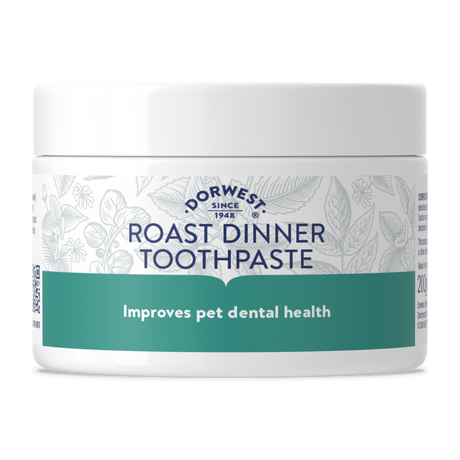
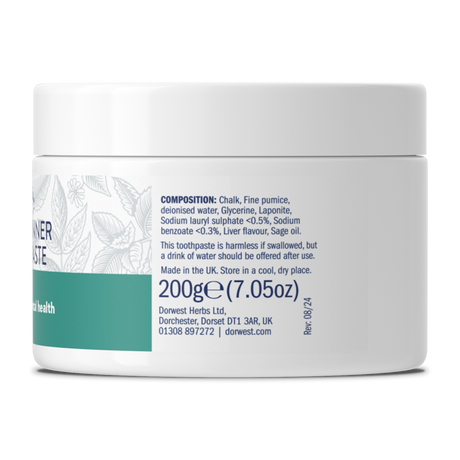
If you’re looking to build a regular brushing routine, our Roast Dinner Toothpaste is a low-foaming, vet-approved toothpaste with a tasty flavour to help make brushing a little easier. You can also read our guide on How to brush your dog’s teeth, for simple tips on introducing toothbrushing into your dog’s routine.
The benefits of our triple-action Dental Powder for dogs and cats
Our NEW Dental Powder contains Ascophyllum nodosum to be used as a part of your daily oral care routine.
Designed to be sprinkled over food and served, it offers an easy way to support your pet's dental routine every day — especially for owners who struggle with brushing or want additional dental support. Alongside Ascophyllum nodosum, our Dental Powder also contains a postbiotic and parsley to provide triple-action daily support for:
- reducing plaque build-up as part of a regular dental routine
- maintaining a healthy oral microbiome
- supporting gum health and naturally fresher breath
It is not designed to replace brushing or professional dental care, but it can be used as part of a consistent dental routine to help keep daily oral care simple.
Discover our NEW Dental Powder >

Need help choosing the right dental support?
Every dog is different, and the right dental routine will depend on their age, habits, diet and how comfortable they are with brushing.
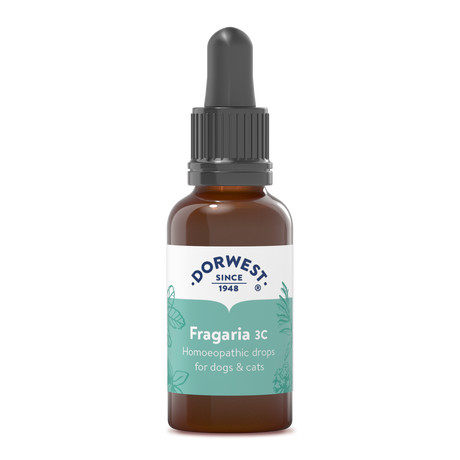
If you’d like to learn more about our dental range, our friendly team of product experts are always happy to help. Whether you’re unsure where to start, want to know how Dental Powder fits alongside brushing, or would like advice on using products such as Roast Dinner Toothpaste and Fragaria 3C, we can help you choose the most suitable daily support for your dog.
If you have any questions or need help choosing which dental product is best for your pet, feel free to contact our friendly team of product experts on 01308 897272 or email info@dorwest.com.
References
¹ Effects of Ascophyllum nodosum on the Oral Health of Dogs: A Double-Blind, Randomized, Placebo-Controlled Single-Center Study, 2018
https://www.frontiersin.org/journals/veterinary-science/articles/10.3389/fvets.2018.00168/full
² Influence of Dietary Supplementation With a Powder Containing A.N. ProDen™ Ascophyllum nodosum on Dog Saliva Metabolome, 2021
https://www.frontiersin.org/journals/veterinary-science/articles/10.3389/fvets.2021.681951/full
³ Ascophyllum nodosum as a nutrient supporting oral health in dogs and cats: a review, 2023
https://pubmed.ncbi.nlm.nih.gov/37727971/