
The naughty list: 5 things not to give your dog at Christmas
Most pet owners love to spoil their dogs and cats during the festive season. From extra cuddles to tasty leftovers, there are many reasons why pets enjoy Christmas just as much as we do. However, amongst the excitement, there are a few hidden dangers you simply wouldn’t think to look out for. It’s important that you and your guests are aware of what not to feed dogs at Christmas.
We have created this detailed list to help your Christmas be a safe one, combining advice on food, plants, and stress management.
1. Roast dinner: Turkey bones, gravy & pigs in blankets
When you’re dishing up the turkey with all the trimmings and your dog is sat looking up at you with loving eyes, it’s easy to be tempted to sneak them a little piece. But before you let them indulge, first check if it’s safe to give them.
The danger of cooked bones
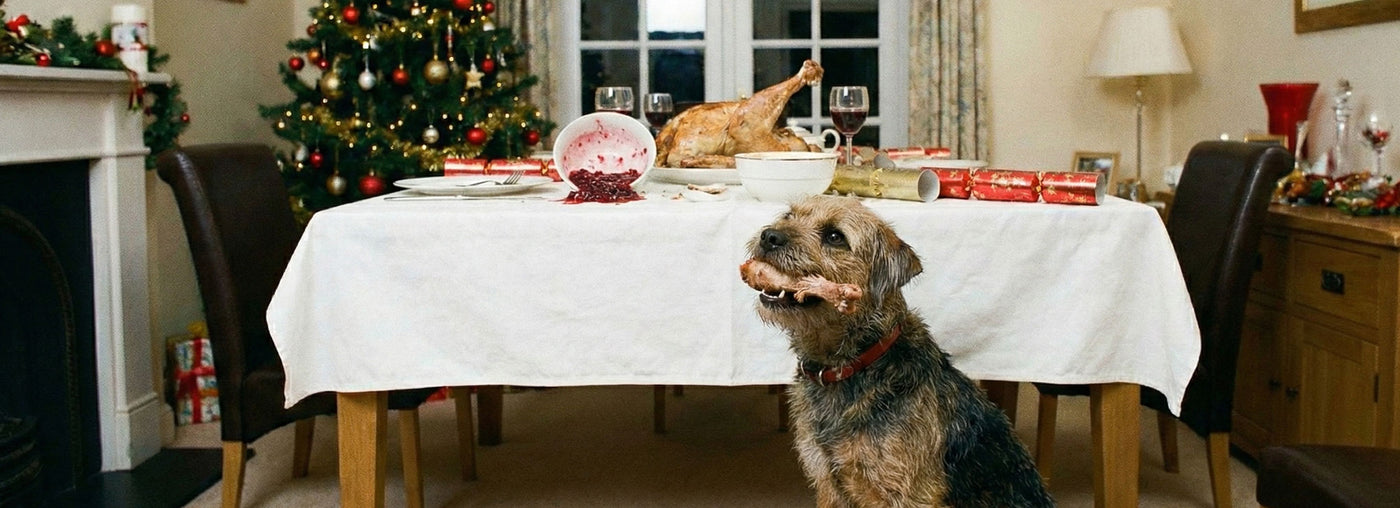
Cooked bones are a common problem with dogs and cats around the festive period as many families are cooking roast dinners. Turkey bones, in particular, pose significant Christmas dangers for pets. While raw bones can be safe for some dogs, once an animal bone is cooked, the structure changes; they can become very brittle and indigestible.
If you are tempted to feed scraps, double-check that there are no bones present, checking for even very little ones. When chewed, cooked bones can splinter inside your dog’s mouth, throat, or stomach. In some cases, this can cause a blockage or a sharp splinter in the stomach which can result in an operation to have them removed. It is always best to be safe and ensure all bones are disposed of securely where your pet cannot reach them.
Fatty foods and pancreatitis
Another tip is to avoid giving too many fatty foods or off-cuts to your dog. Some of our favourite things are things like pigs in blankets, turkey skin, and rich gravies, sadly these are simply too high in fat and salt for dogs. Giving these to your dog can cause stomach upsets and vomiting. It’s always best to limit table scraps, as most human food is far too rich and fatty for our pets. Over time, a high intake of fat can lead to pancreatitis, a painful and serious condition for pets.
A safe & beneficial alternative: Dorwest Bone Broth
Your dog doesn’t have to miss out on the festive fun - treat them to our premium Bone Broth! A far safer alternative to rich gravy, our Dorwest bone broths are expertly crafted to provide nose-to-tail nourishment. Available in Nordic Beef and Free-Range Chicken, each carton is slow-cooked with apple cider vinegar to extract the maximum amount of nutrients, resulting in a delicious topper packed with collagen, protein, and essential minerals.

With only three 100% natural ingredients and absolutely no artificial hormones or antibiotics, it’s the perfect way to support your dog’s gut health and joint connective tissue while they enjoy a special Christmas treat. Simply pour it over their dinner for a flavour boost, serve it as a hydrating drink, or even freeze it into refreshing ice cubes to keep them occupied during the festivities.
2. Grapes, raisins and currants
While fruit is often seen as a healthy snack for humans, certain festive fruits are high on the list of what not to feed your dog at Christmas. Grapes, raisins, currants, and sultanas can be incredibly dangerous.
These ingredients are staples in our festive diets, found in mince pies, Christmas puddings, and Christmas cakes. However, they can be toxic to dogs. In the worst cases, eating these can cause kidney failure. Some dogs can tolerate small amounts, while others can be affected after just a few, so the reaction can be unpredictable.
It is vital to keep those mince pies and Christmas puddings for yourself and the family and not the dogs. Keep them covered and well out of reach in case your pooch goes in for a sneaky taste-test.
If you suspect your dog has managed to eat anything containing currants, sultanas, or raisins, you must monitor their behaviour closely. Increased thirst and less urination breaks can be indicators of something worse (like kidney issues). If these signs are spotted, we recommend you contact your vet immediately.
3. Chocolate: A festive favourite
Chocolate positioning is one of the most common culprits among dogs during the holidays. As some of us probably know, dogs crave sweet treats too! Christmas is a time when chocolate is everywhere, from tree decorations to wrapped gifts under the tree so don’t trust your dog to steer clear of the coffee table that has an open box of Quality Street on top.
What happens if my dog eats chocolate?
It depends on the size of the dog, how much they ate, and the type of chocolate (theobromine quantity) as to how they are affected and will subsequently react. If you’re concerned or your dog starts having a reaction, we’d recommend seeking out veterinary assistance as quickly as possible.
To get help immediately, you can calculate the risk level based on how much chocolate they have eaten and the type. A chocolate toxicity calculator for dogs is very useful for determining the best steps to take based on the type of chocolate eaten (milk, dark, etc) and the amount. It’s not complicated and it’s easy to complete; you can input answers based on metrics such as small or large dog and a small wrapped chocolate through to chocolate cake.
Please note: if your dog has consumed chocolate it is highly advised you take them to the vet; eating chocolate can be fatal in dogs.
How poisonous is chocolate to dogs?
Chocolate is toxic to dogs because cacao beans contain a stimulant called theobromine. While humans can metabolise this easily, dogs process it much more slowly, allowing it to build up to toxic levels in their system.
It is important to remember that the risk level varies depending on the type of chocolate. Dark chocolate contains significantly higher levels of theobromine than milk chocolate, meaning even a small amount can be dangerous.
However, we highly recommend avoiding all chocolate, whether dark, milk, or white as even small amounts can trigger serious health issues.
The consequences of chocolate poisoning can be severe, ranging from vomiting and hyper-salivation to heart problems, kidney damage, and issues with the nervous system. Therefore, it is important to keep all chocolate products, whether in boxes, wrappers, or hanging on the tree, well out of reach from curious noses!
How will they react? (Symptoms to look out for)
If your dog has consumed some chocolate, they may start to show some of the symptoms below, which are indications of chocolate poisoning. If your dog experiences any of the last 5 symptoms take them to the vet immediately. However, we would recommend that regardless of symptoms, if you think your dog has eaten chocolate, to call or visit your vet to be safe.
Look out for these symptoms:
- Being sick
- Diarrhoea
- Quickened breathing
- Hyperactive/restless
- Tremors, incoordination or muscle tension
- Increased heart rate
- Seizures
It’s important that you closely monitor your dog for the next 24 hours after consumption and to contact your vet if you have any concerns.
4. Christmas nuts and alcohol
The snack bowl is another potential hazard zone. Pecans, macadamia nuts, pistachios, and walnuts are some of the nuts that can be toxic or poisonous to dogs.
Macadamia nuts are often the most harmful. Ingestion can cause vomiting, tremors, fever, and weakness. If you think your dog has eaten any macadamia nuts, make sure to take them to the vet as soon as possible.
Additionally, we must mention alcohol. It is important to ensure food cooked in alcohol or empty glasses are moved away out of reach. Alcohol can make dogs drowsy, cause their blood sugar to drop, or, in serious cases, lead to seizures.
5. Festive plants: A hidden danger
Festive plants can also be a risk to your pets. Poinsettia, holly, and mistletoe are all plants we associate with the festive season. Alas, like many household plants, they are poisonous to our pets.
- Poinsettia: Their iconic red leaves are mildly toxic to cats and dogs. Ingestion can cause irritation of the mouth and stomach with overproduction of saliva (hyper-salivation) and sometimes vomiting.
- Holly: Apart from the spikes, holly leaves are not what present the primary danger to our pets. As a matter of fact, it’s the berries which do. If eaten, holly berries can cause stomach upset and diarrhoea.
- Mistletoe: The leaves don’t cause any harm; it’s the white berries you need to be aware of. When ingested by your pet, they can cause vomiting, diarrhoea, excessive drooling, and abdominal pain.
Interestingly, although mistletoe berries are harmful, mistletoe extract offers calming benefits when prepared correctly. One of our herbal products, Dorwest Herbs Scullcap and Valerian Tablets, contains mistletoe extract. This is because it supports the natural calming pathways within the nervous system and helps with circulation.

Managing stress
Finally, it isn't just digestive upsets to watch out for, their mental wellbeing is just as important. The festive season often brings a sudden change in routine, strange noises, and a house full of guests, which can be overwhelming for us, let alone our pets!
If you know your pet struggles with the hustle and bustle, calming herbal support can make a world of difference. We recommend starting our Scullcap & Valerian Tablets a in the lead-up to the big day; they work naturally to relax the nervous system without causing drowsiness. Then, for those peak moments of excitement or anxiety, such as when the doorbell rings or crackers are pulled, our fast-acting Valerian Compound is the perfect top-up. It can be given alongside the tablets and works in just 30 minutes to help keep them calm in the Christmas chaos.
Another tip is to create a 'safe space' where your pet can escape. Ensure they have a peaceful area away from the noise to retreat to if things get too much. If you want to keep it festive, why not decorate it into your pet's own "Santa’s Grotto" (using pet-friendly decorations, of course)? This gives them a secure haven to relax in while the festivities continue elsewhere!
Have a safe and happy Christmas
With a number of Christmas dangers for dogs, it’s always important to keep an eye on your pet over the festive season.
To find out more about our herbal remedies and supplements for dogs, including our Bone Broth and calming supplements, our experienced advisors would love to help.
If you have any questions, please get in touch on 01308 897272 or email us at advice@dorwest.com


